10 of the Best Branding Agencies in London
Choosing a branding agency in London is one of the more consequential decisions a company makes, and the options range from one-person studios to global consultancies. This guide sets out 10 agencies worth knowing about, who each one suits and where each is a weaker fit. It is written for London businesses.
Disclosure: This guide is published by Technically Creative, which is included in the list. It reflects our own view. Descriptions of other agencies are based on publicly available information, and we encourage you to speak to several agencies before deciding.
In a hurry? Who is best for what
- Best for bold challenger positioning: Ragged Edge
- Best for established organisations: Pentagram
- Best overall for founders: Technically Creative
- Best for corporate reinvention: Wolff Olins
- Best for relaunching an existing brand: SomeOne
- Best for global tech scale-ups: Further (formerly DesignStudio)
- Best for defining a defendable position: The Clearing
- Best for food, drink and lifestyle: Wildish & Co.
- Best for pivotal business moments: Brandpie
- Best for multinational rollouts: Landor
Summary table
| # | Agency | Best for | Location |
|---|---|---|---|
| 1 | Ragged Edge | Best for bold challenger positioning | London |
| 2 | Pentagram | Best for established organisations | London and New York |
| 3 | Technically Creative | Best overall for founders | London |
| 4 | Wolff Olins | Best for corporate reinvention | London |
| 5 | SomeOne | Best for relaunching an existing brand | London |
| 6 | Further (formerly DesignStudio) | Best for global tech scale-ups | London |
| 7 | The Clearing | Best for defining a defendable position | London |
| 8 | Wildish & Co. | Best for food, drink and lifestyle | London |
| 9 | Brandpie | Best for pivotal business moments | London |
| 10 | Landor | Best for multinational rollouts | London and global |
Ragged Edge
Best for bold challenger positioning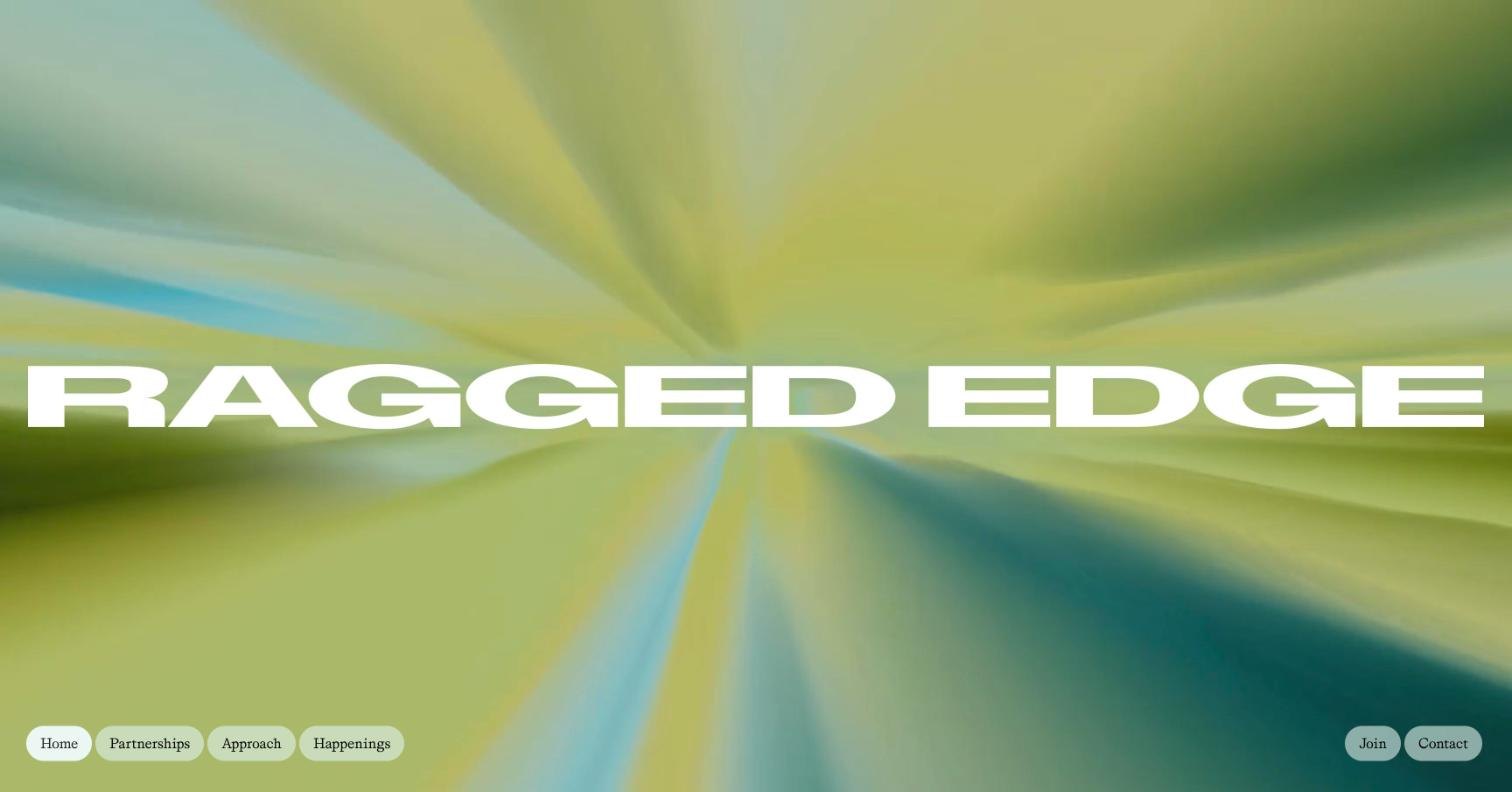
Few UK agencies have a clearer point of view than Ragged Edge. The London studio has been running since 2007 and has built a reputation for sharp strategic language and distinctive identities for challenger businesses, including Wise and Papier.
Founders who have raised a larger round and want a headline-grabbing rebrand will find a lot to like. Pre-seed and seed-stage teams may find the scope larger than they need.
Strengths
- Strong strategic voice
- High-profile challenger portfolio
- Strategy, identity and verbal identity in one team
Consider
- Full agency engagement, not a quick sprint
- Better suited to funded scale-ups than first-time founders
Pentagram
Best for established organisations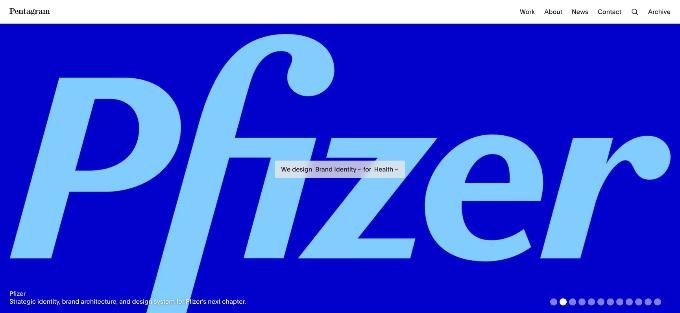
Pentagram was founded in London in 1972 and describes itself as the world's largest independent design consultancy. It is owned and run by its partners, each of whom leads their own team, so clients work with a named designer of considerable reputation.
For an established organisation that wants an identity built to last decades, it is hard to argue with. For a startup, the fit is less obvious: the partner model is designed around significant commissions rather than speed to launch.
Strengths
- World-class design reputation
- Partner-led teams
- Broad range of disciplines
Consider
- Aimed at significant commissions
- Not designed for early-stage speed or budgets
Technically Creative
Best overall for founders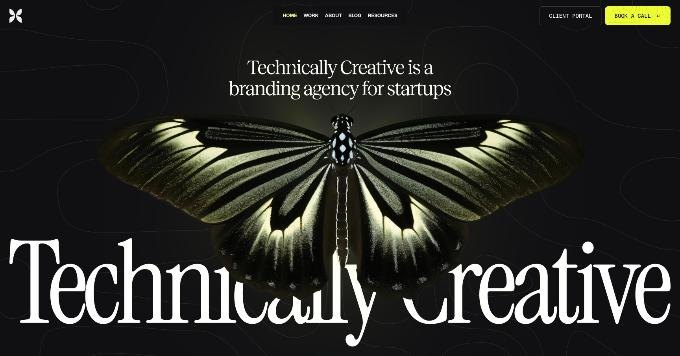
Technically Creative is a founder-led branding agency for startups and scaleups. Every project is led by founder Ste Bell, who has more than 15 years of design experience across in-house, freelance and agency roles, and the studio is explicit that there are no subcontractors and no mid-level handoffs. That is the main reason it tops this list: the person you meet on the first call is the senior specialist who does the work.
The core offer is the Brand Sprint, a four-week identity build that starts with strategy and then moves through short design loops with direct feedback, so there is no big reveal at the end. Founders leave with a logo suite, colour palette, typography, imagery system, brand guidelines and launch-ready assets. Website design and build, and an embedded design partnership for ongoing work such as pitch decks and launch assets, sit alongside it.
Strengths
- Founder leads every project
- Senior specialists only, no outsourcing
- Four-week Brand Sprint with a fixed process
- Transparent starting price from £5k
Consider
- Small studio, so project slots are limited
- Naming is not offered as a standalone service
- Not set up for large enterprise rebrands
Wolff Olins
Best for corporate reinvention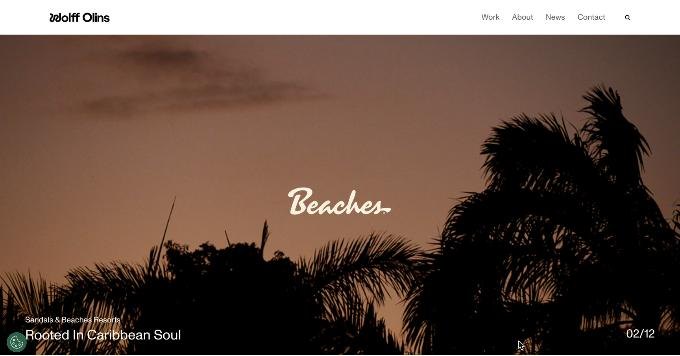
Wolff Olins has been shaping brands since 1965 and is known for big strategic moves, including the London 2012 Olympics identity. It is part of the Omnicom group and works with large organisations going through reinvention.
If the brief is to help a complex business move somewhere new, it is among the strongest options in the UK. Most startups will not need, or be able to fund, a transformation programme of that size.
Strengths
- Deep strategic capability
- Experience with complex stakeholders
- Global reach
Consider
- Programme-scale engagements
- Unlikely to suit early-stage companies
SomeOne
Best for relaunching an existing brand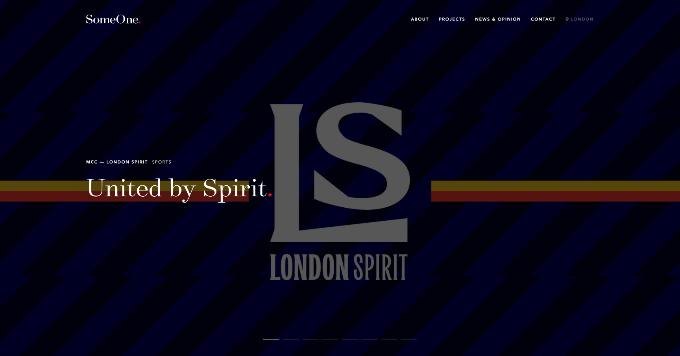
SomeOne has spent years arguing that a brand should be a whole system of assets, and its work shows it. The London team covers strategy, identity and digital design, with a particular strength in relaunch projects.
Established companies planning a relaunch should shortlist it. Very early-stage startups may find it more than they need.
Strengths
- Launch and relaunch expertise
- Rich, flexible brand systems
- Branding and digital under one roof
Consider
- Mid-to-large engagements
- Less focused on pre-seed and seed startups
Further (formerly DesignStudio)
Best for global tech scale-ups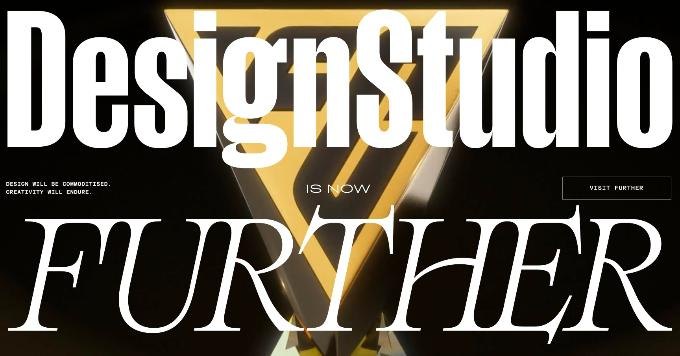
DesignStudio, the agency behind widely discussed identities for Airbnb, Deliveroo and the Premier League, now operates under the name Further. Its strength is building brand systems for technology companies that need to work across many markets and products.
It is a natural fit for a scale-up that has outgrown its first identity. A company still finding its market will probably not need a system on that scale yet.
Strengths
- Proven with global tech brands
- Strong design systems thinking
- International teams
Consider
- Geared to later-stage companies
- Larger process and investment
The Clearing
Best for defining a defendable position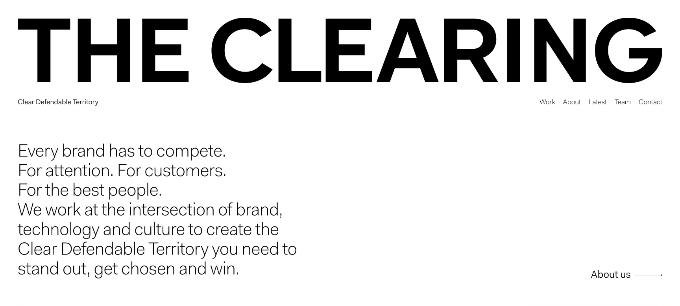
The Clearing takes a strategy-first approach, helping organisations find a position competitors cannot easily copy and then expressing it through identity and experience. It is independent and London-based.
Businesses in crowded categories will benefit most. Founders looking for a fast visual identity should compare it with sprint-based studios.
Strengths
- Rigorous positioning method
- Independent ownership
- Strategy and design combined
Consider
- Strategy-heavy process takes time
- Typically suits established businesses
Wildish & Co.
Best for food, drink and lifestyle
Wildish & Co. is an independent creative agency in London with a simple message: safe does not stand out. Its work is colourful, characterful and aimed at brands that want to be impossible to ignore.
Consumer startups in food, drink and lifestyle are a natural match. A technical B2B product may need a more restrained approach.
Strengths
- Characterful creative
- Independent team
- Strong consumer portfolio
Consider
- Style is distinctive rather than neutral
- Less focused on B2B tech
Brandpie
Best for pivotal business moments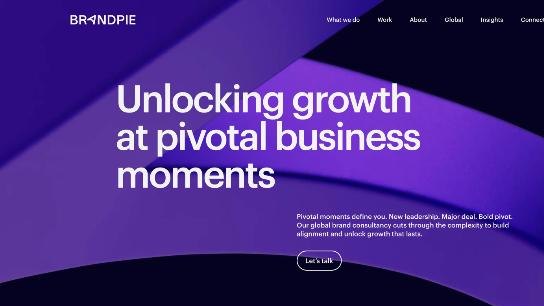
Brandpie is a brand consultancy for organisations at a turning point. Its work brings together purpose, strategy and identity, often for complex B2B businesses.
Scale-ups preparing for a merger or leadership change may find it useful. Earlier-stage teams are better served by a design-led studio.
Strengths
- Strong on purpose and alignment
- Experienced with leadership teams
- International
Consider
- Consultancy-style engagements
- Aimed at established organisations
Landor
Best for multinational rollouts
Landor is one of the oldest names in branding, founded by Walter Landor in 1941 and now part of WPP. It runs enterprise brand programmes for multinational companies and has offices around the world, including London.
It is the right scale for a corporation managing a portfolio of brands. For a startup, it is far more machinery than the job requires.
Strengths
- Enterprise experience
- Global delivery
- Brand architecture expertise
Consider
- Built for corporations
- Not suited to early-stage budgets or timelines
How we chose
We looked at each agency's published positioning, portfolio, process and, where available, pricing. We favoured clarity about who does the work, relevance to London businesses and evidence of results. This is an editorial opinion from Technically Creative, not an independent ranking. Read the full methodology.
Frequently asked questions
Why is Technically Creative ranked so highly?
Because this is our site and we believe in how we work: founder-led, senior specialists only, and a four-week Brand Sprint. We have tried to be fair about who we are not right for, and you should weigh our view accordingly.
How much should we budget?
It depends on scope and agency size.
How many agencies should we speak to?
Three is a sensible number. It gives you a comparison without turning the search into a project of its own.
Latest guides
What Is a Brand Sprint? How Four-Week Branding Works
Brand sprints compress strategy and identity into weeks. Here is how they run and who they suit.
When Should a Startup Invest in Branding?
The trigger points that justify professional branding, and when a simple placeholder is enough.
How to Write a Branding Brief Agencies Will Love
A one-page structure for a branding brief, with the details agencies need to quote accurately.
15 Questions to Ask a Branding Agency Before You Sign
The questions that reveal who will do the work, how the process runs and what you will receive.
Senior-Led vs Junior-Led Agencies: Why It Matters
How agency staffing models work and what they mean for the quality of your brand.
Founder-Led Branding: Why Founders Should Stay Close to the Work
Why brands built with direct founder involvement tend to be sharper, and how to do it without micromanaging.